These coiled styles have deep roots in African and Black hairstyling traditions. They aren’t simply a new social-media trend. And while the knots themselves are a finished hairstyle, taking them down to reveal a curled pattern creates a different style known as a Bantu knot-out.
Looking for ideas before your next style? Start with the dramatic geometry of look 1, then keep scrolling for loose curls, metallic details, and a back view that may just steal the show. Here are 15 ways to wear Bantu knots, from understated to expressive.
1. Defined Bantu Knots With Geometric Parts
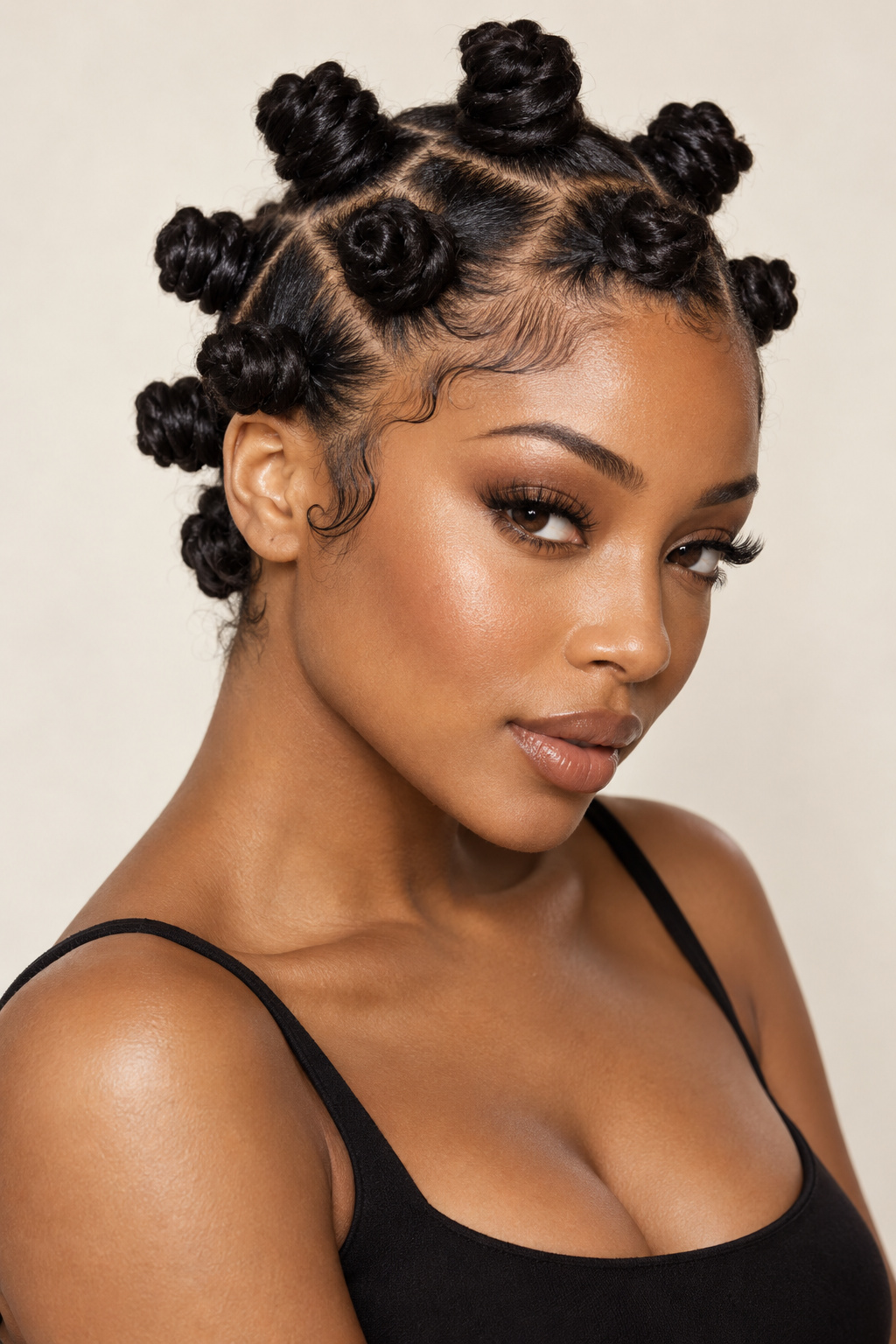
The sharp, crisscrossing part lines make this look feel especially intentional. Each dark coiled knot sits in its own neatly defined section, giving the hairstyle a sculptural quality without requiring dramatic color or accessories. The slightly angled front view lets you appreciate both the arrangement and the soft, face-framing edges. If you love a polished silhouette, this is a beautiful place to start. Notice how the partings do almost as much visual work as the knots: there is interest even in the spaces between them. Save this angle if you want to show a stylist exactly how clearly you would like the sections to read.
2. Half-Up Bantu Knots With Full Curls
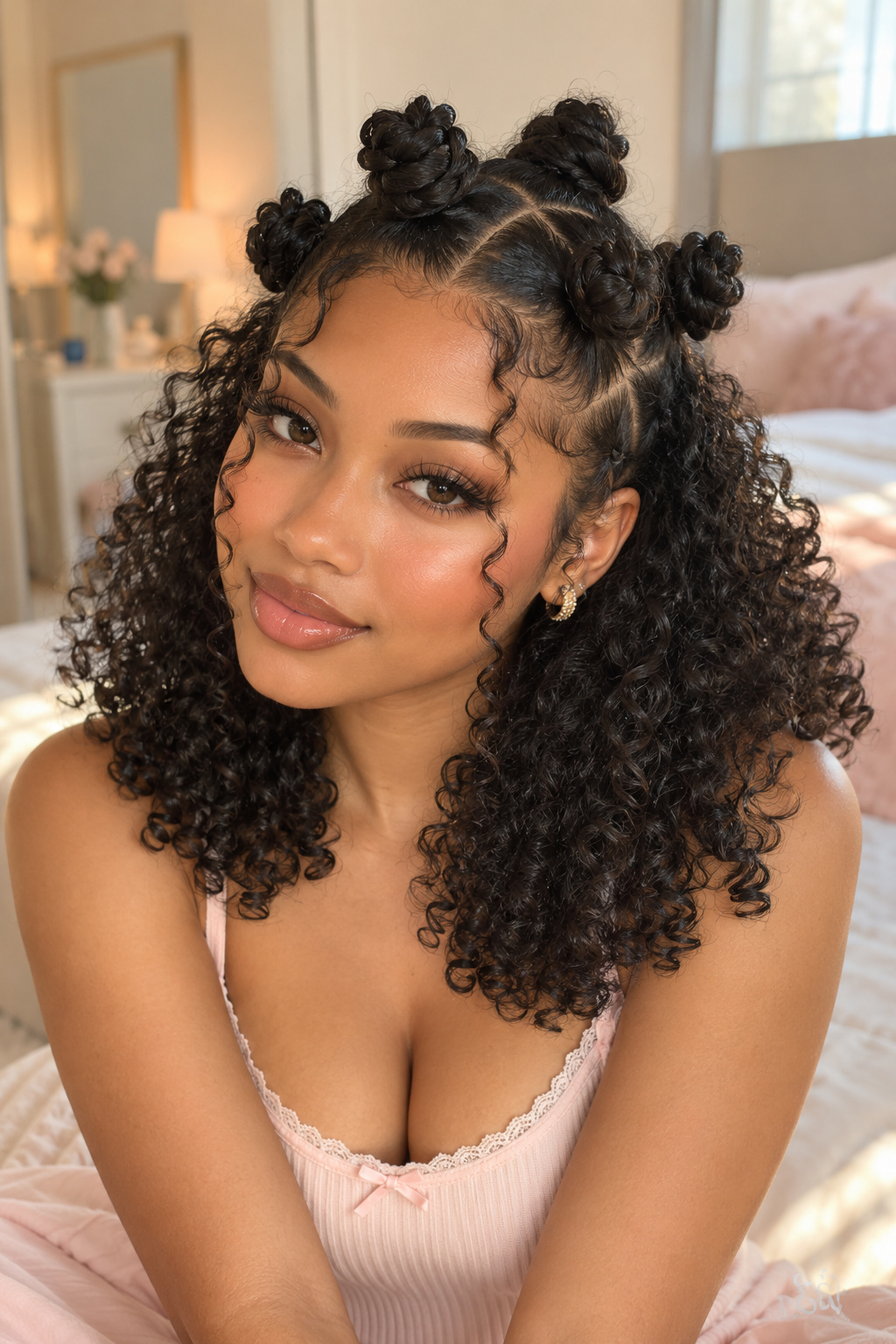
Why choose between knots and loose curls? This half-up interpretation gathers several knots across the crown while leaving a cloud of defined curls free around the shoulders. It’s a softer shape than an all-over knot arrangement, with plenty of movement and volume. The contrast between the controlled top sections and the lively curls underneath makes the hairstyle immediately recognizable. It also gives you two distinct textures to play with visually: a tidy crown and a fuller, softer outline below. For inspiration, pay attention to where the knots stop and the curls begin—that balance is what defines this version.
3. Small Bantu Knots With Crisp Diagonal Sections
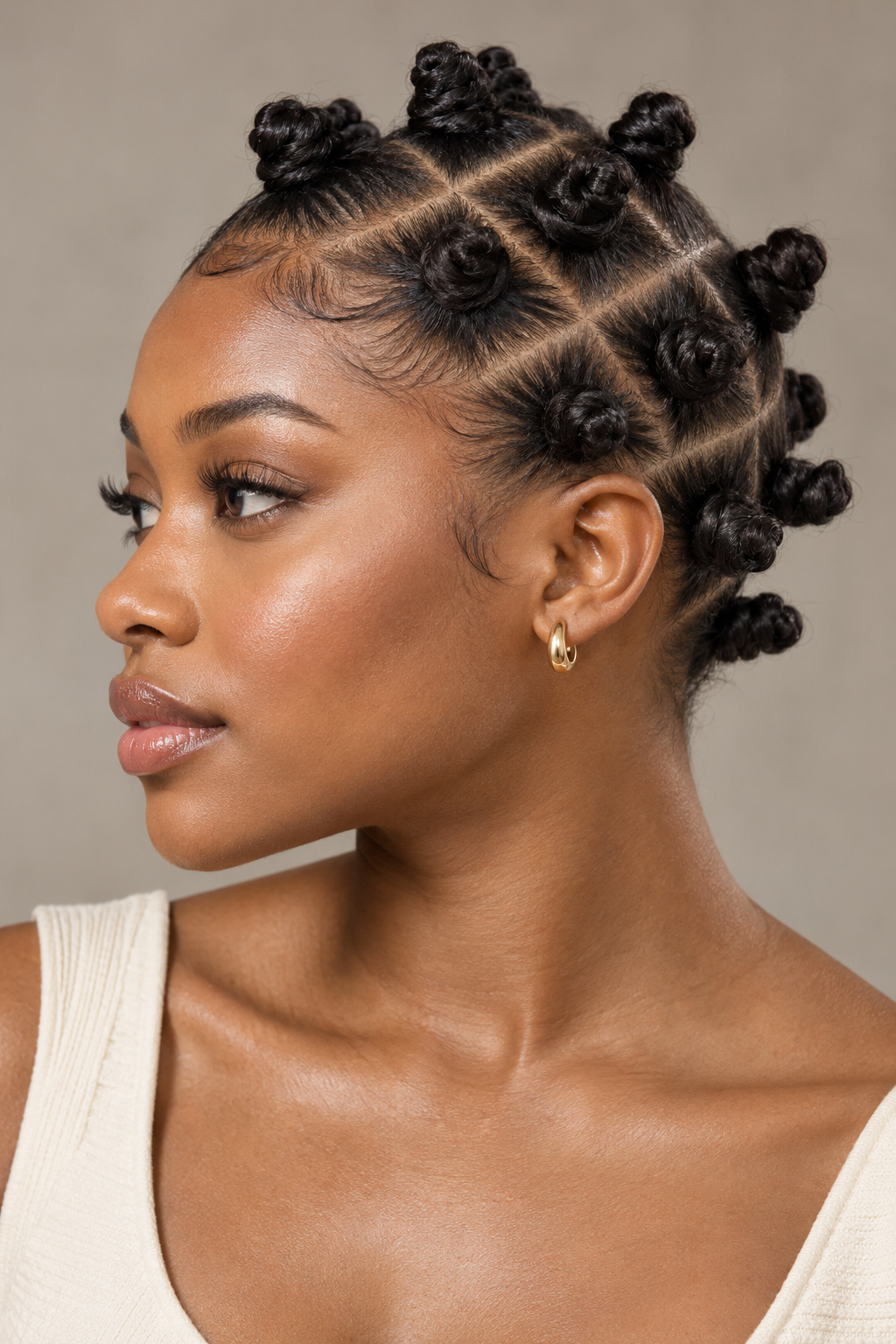
Seen from the side, this style is all about the parting pattern. Small, evenly spaced coils trace the head, while diagonal lines create a striking rhythm between the knots. The look has a clean finish and puts the craftsmanship of the sections front and center. It also shows why a side-angle photograph can reveal details that a straight-on portrait might miss. From the front, you might first notice the neat little knots; from this view, the angled sections become the most memorable feature. If precise geometry is what draws you to Bantu knots, this is one of the strongest reference images in the collection.
4. Copper-Toned Bantu Knots With Braided Accents
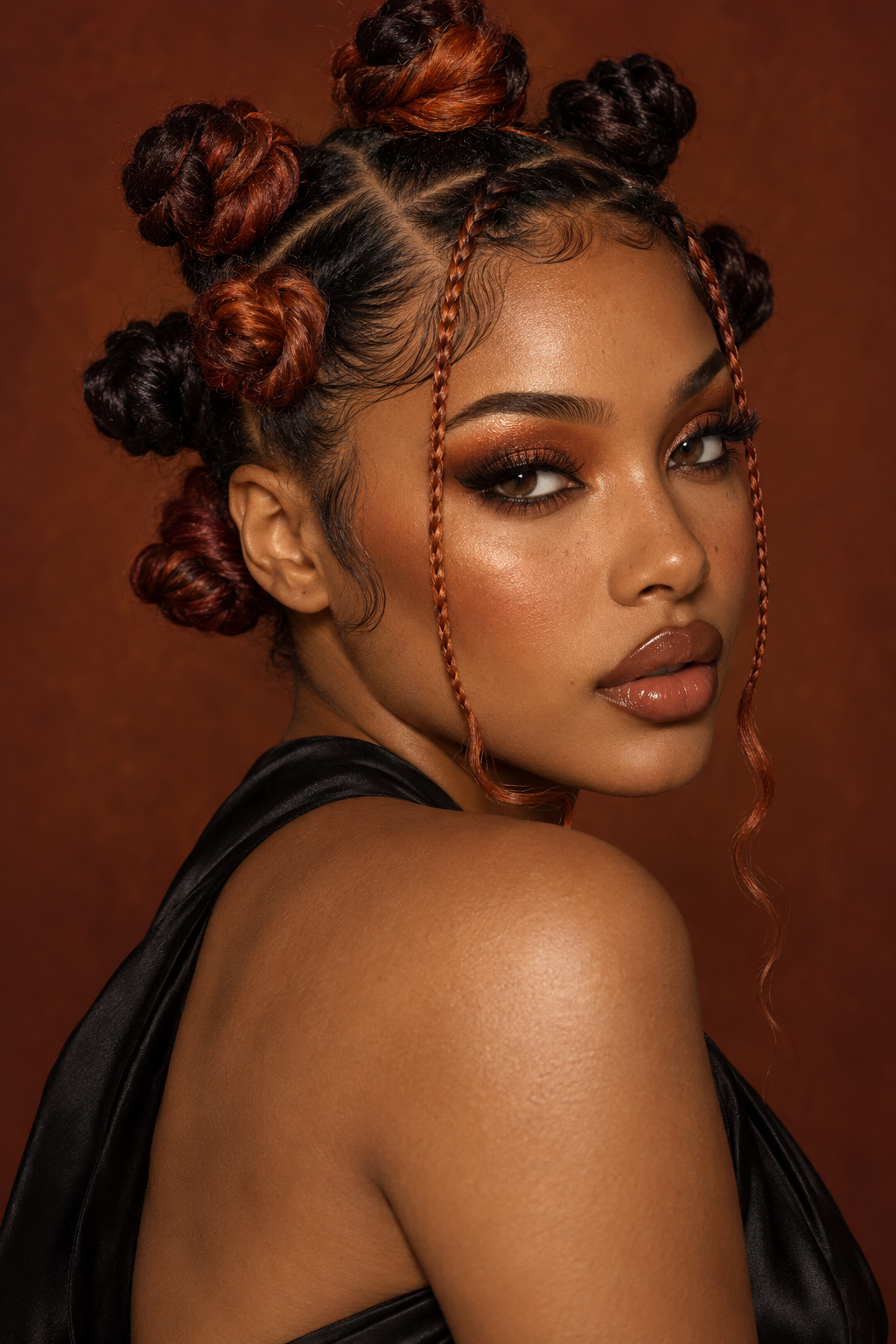
Warm copper and deep brown tones add dimension to these chunky knots, but the delicate braided strands are what really change the silhouette. Two thin accents fall beside the face, creating a contrast with the rounded coils above. This is a more editorial direction for someone who loves visible color variation and a little extra detail around the hairline. Rather than relying on one big accessory, the look lets color and the narrow hanging braids create movement around the face. It is especially striking against a simple outfit that lets the hair keep the attention.
5. Minimal Bantu Knots With a Center-Part Effect
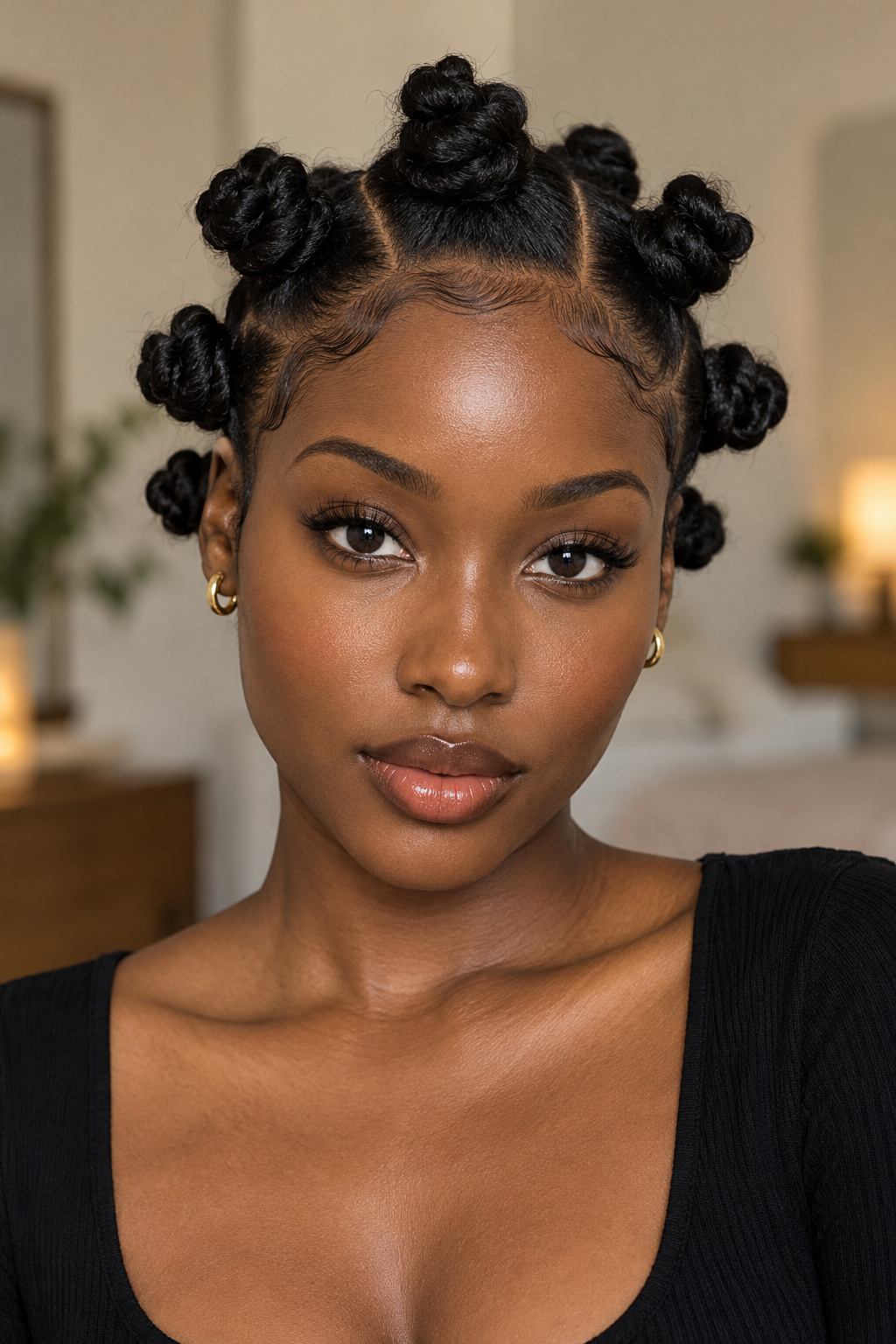
A straightforward front view makes this compact set of knots easy to appreciate. The tidy part lines and balanced placement let the dark coils stand on their own, while the soft edges keep the overall finish from feeling severe. It has a streamlined, understated mood that works as a counterpoint to the more decorated looks in this collection.
6. Bantu Knots With Long Bubble-Braid Details
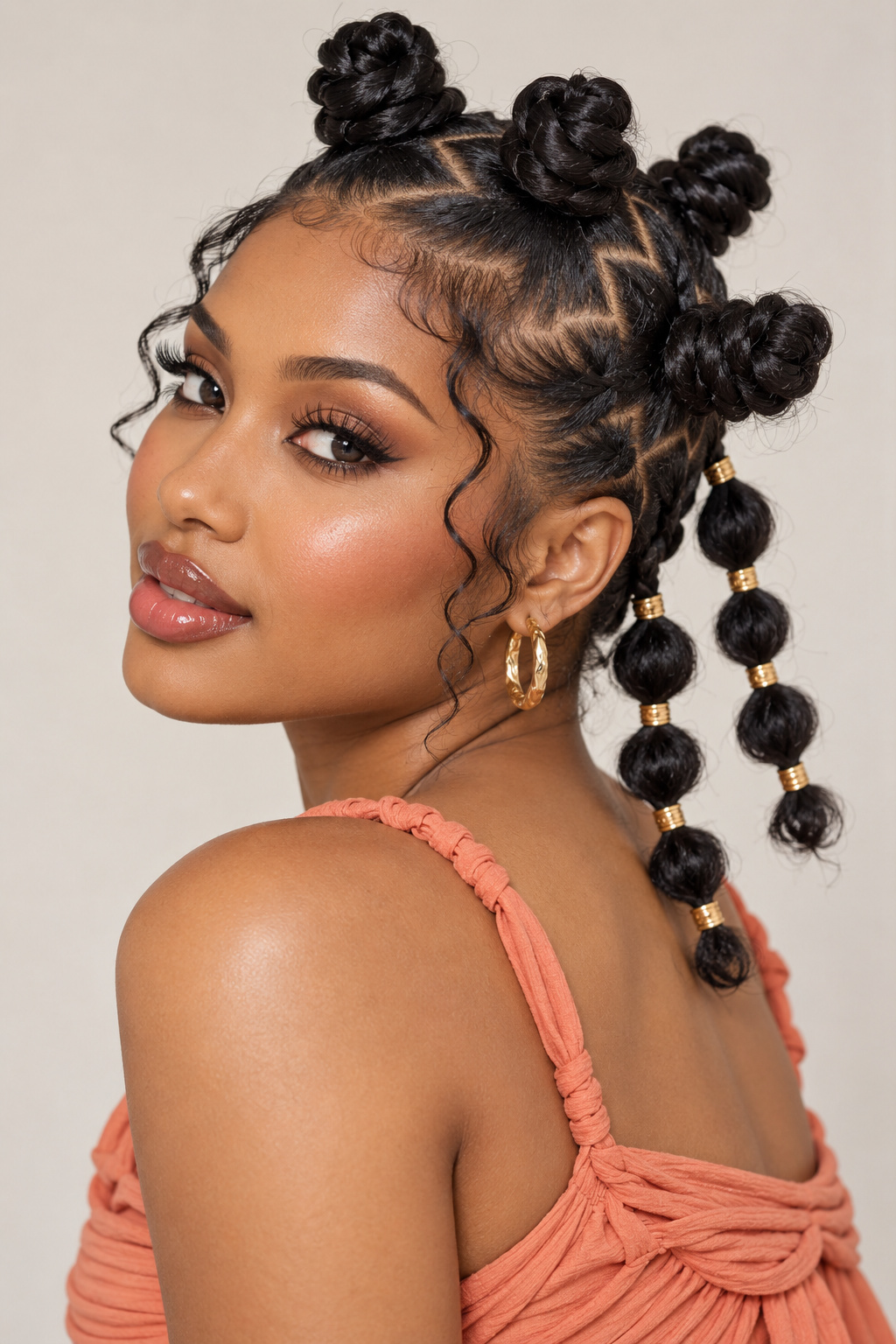
This hairstyle combines coiled knots along the top and sides with two long, segmented strands hanging down. Those rounded, bubble-like sections add length and an unexpected rhythm to the overall shape. The three-quarter view shows the contrast especially well: compact knots near the scalp, then elongated detailing beneath them. It’s a creative option for anyone drawn to hybrid styles.
7. Three Jumbo Knots for a Sculptural Silhouette
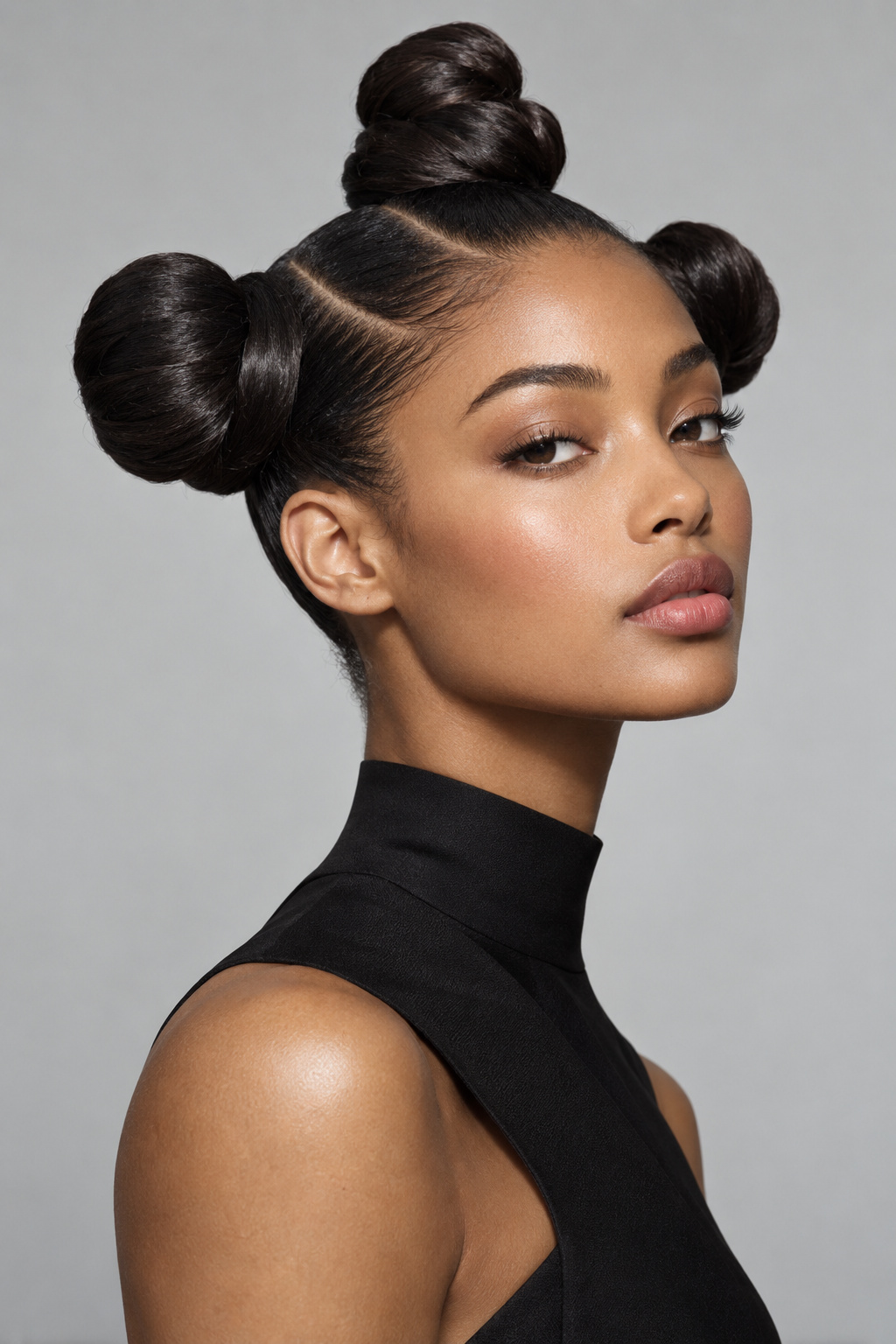
Sometimes fewer knots create the strongest visual impact. Here, three oversized, glossy coils are arranged across the top and sides of the head, creating a bold, almost architectural shape. Smooth, clean sections emphasize the scale of each knot. This look shifts the focus away from intricate repeating patterns and toward pure proportion.
8. Color-Wrapped Bantu Knots
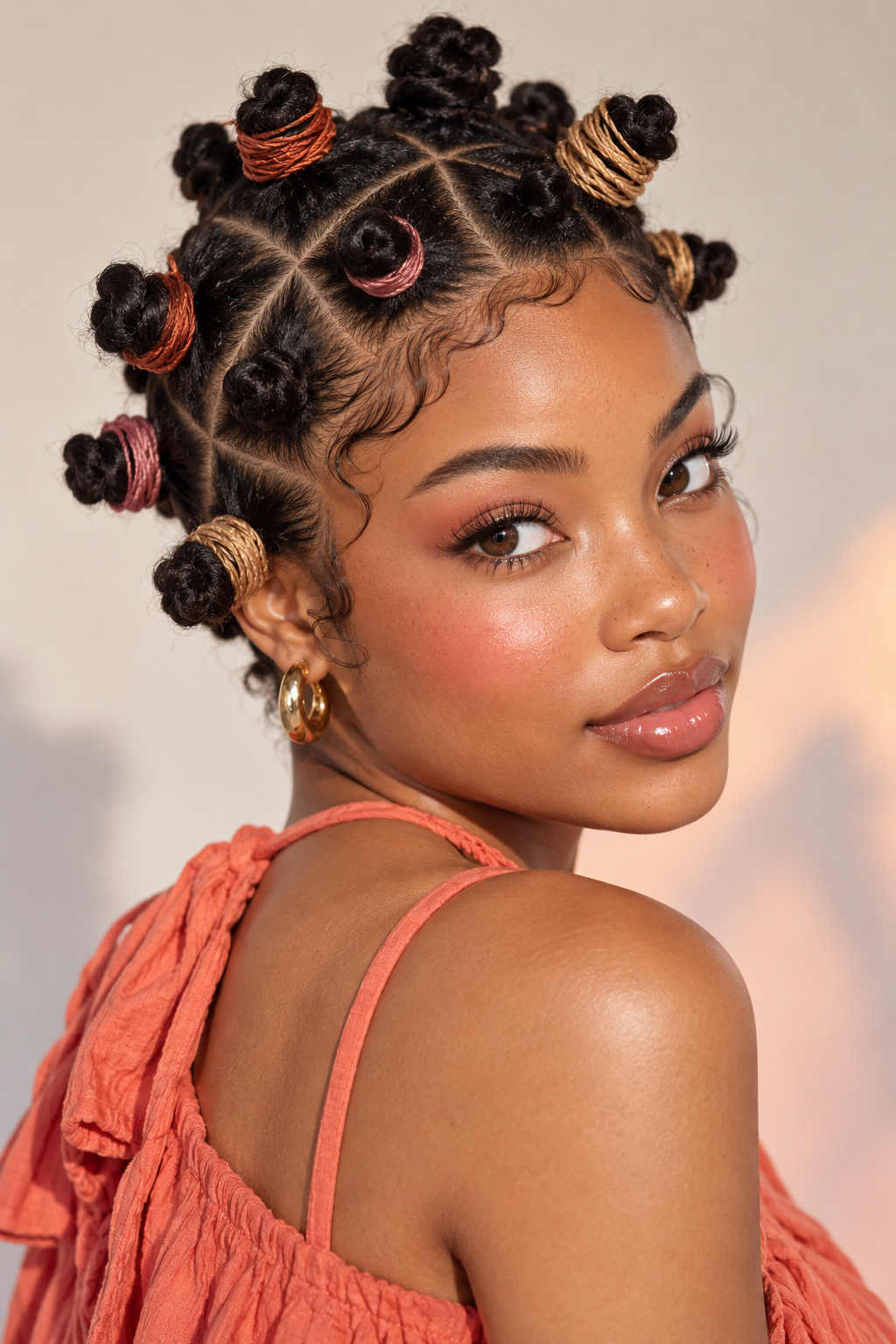
Small knots get a playful update with bands of warm orange, copper, and pale gold wrapped around selected coils. The decorative accents stand out against the dark hair, while the angled section lines add visual interest even between the colored knots. If you like the familiar shape of traditional Bantu knots but want a more expressive finish, color placement can make a big difference.
9. Spiral-Parted Bantu Knots From the Back
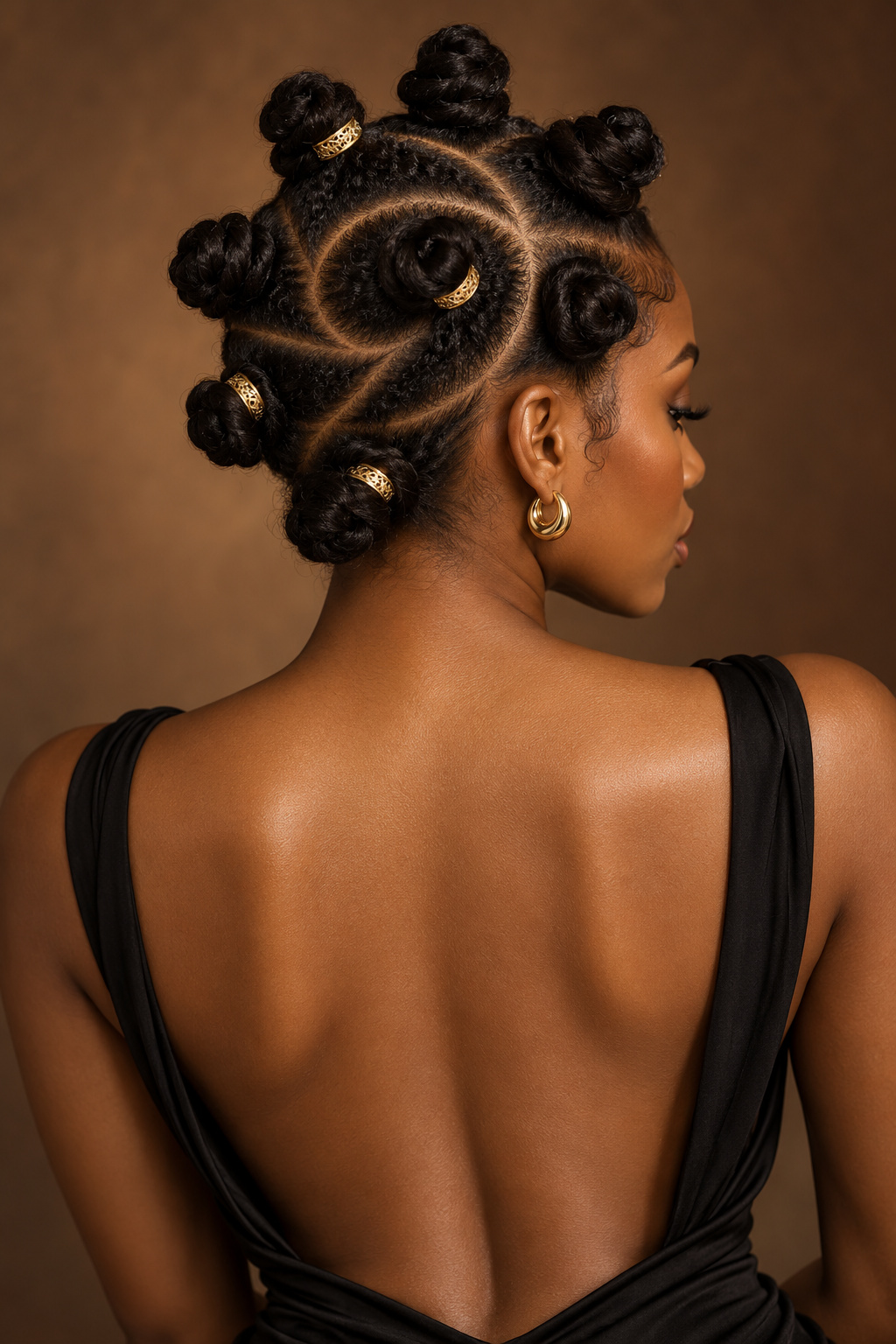
The back view is the star of this hairstyle. Instead of a simple grid, curved partings sweep around the head, drawing the eye toward rounded coils with tiny metallic accents. The design feels almost like a pattern drawn into the hair. Follow the curved lines with your eye and you can see how the sections guide attention from one knot to another. Unlike a regular checkerboard parting pattern, these sweeping shapes make the whole arrangement feel more fluid. This is one of the images worth saving specifically for its back view: a front-facing photo could never tell the whole story.
10. Soft Bantu Knots With Loose Tendrils
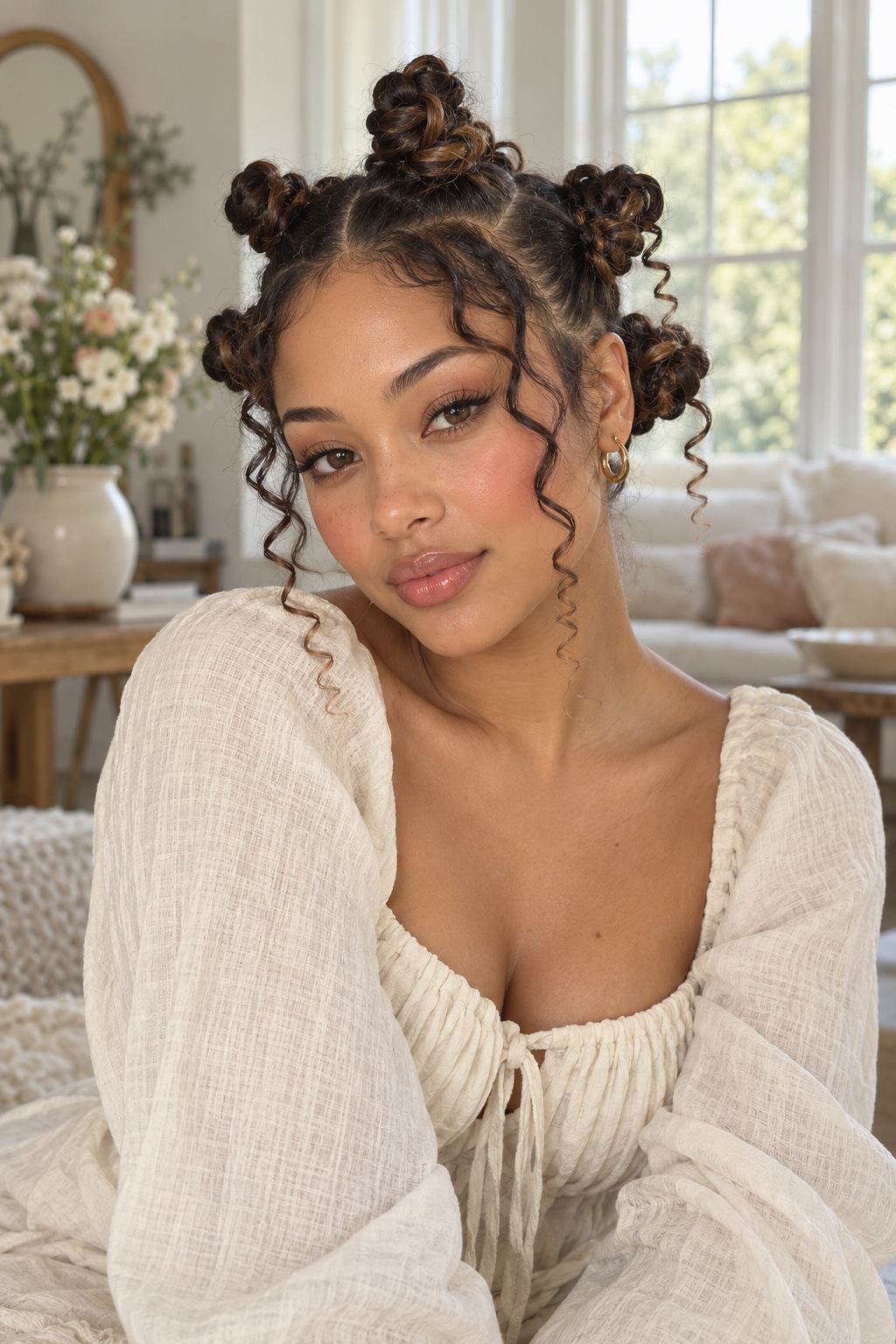
A few loose spirals around the face change the entire mood of this hairstyle. The knots themselves are neatly arranged above, but the long curly tendrils and soft, warm-toned styling make it feel relaxed and romantic. Compared with the fuller half-up curls in look two, this version uses smaller face-framing pieces as the main softening detail.
11. Bantu Knots With Long Segmented Side Strands
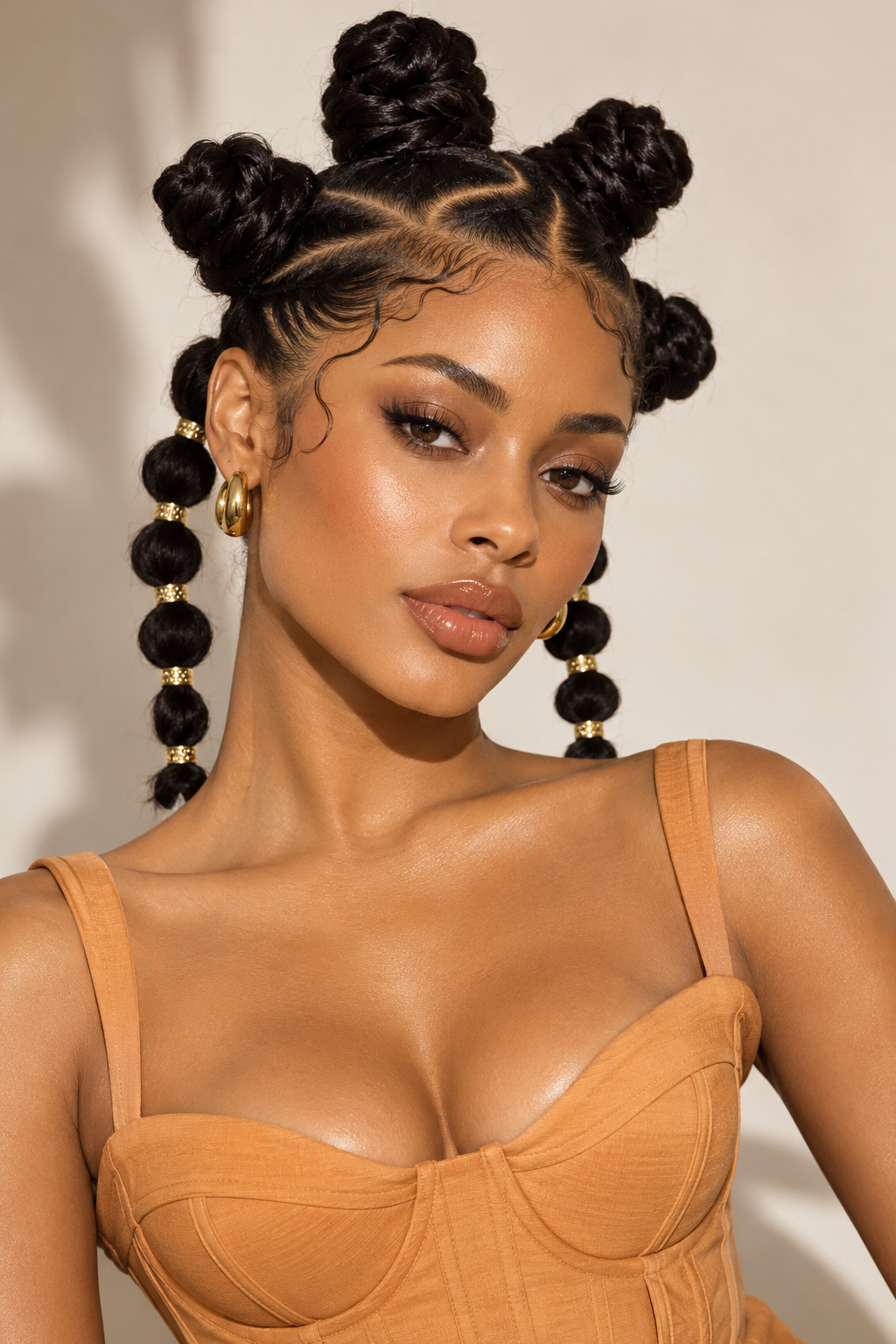
Large, clearly spaced knots frame the top of the head, while two long strings of rounded hair sections hang near the shoulders. The silhouette feels symmetrical and graphic, especially from the front. Rather than adding bright color, this version lets the unusual side details provide the personality. Pairing compact shapes with dangling sections makes the finished style visually dynamic.
12. Gold-Accented Bantu Knots With Braided Sections
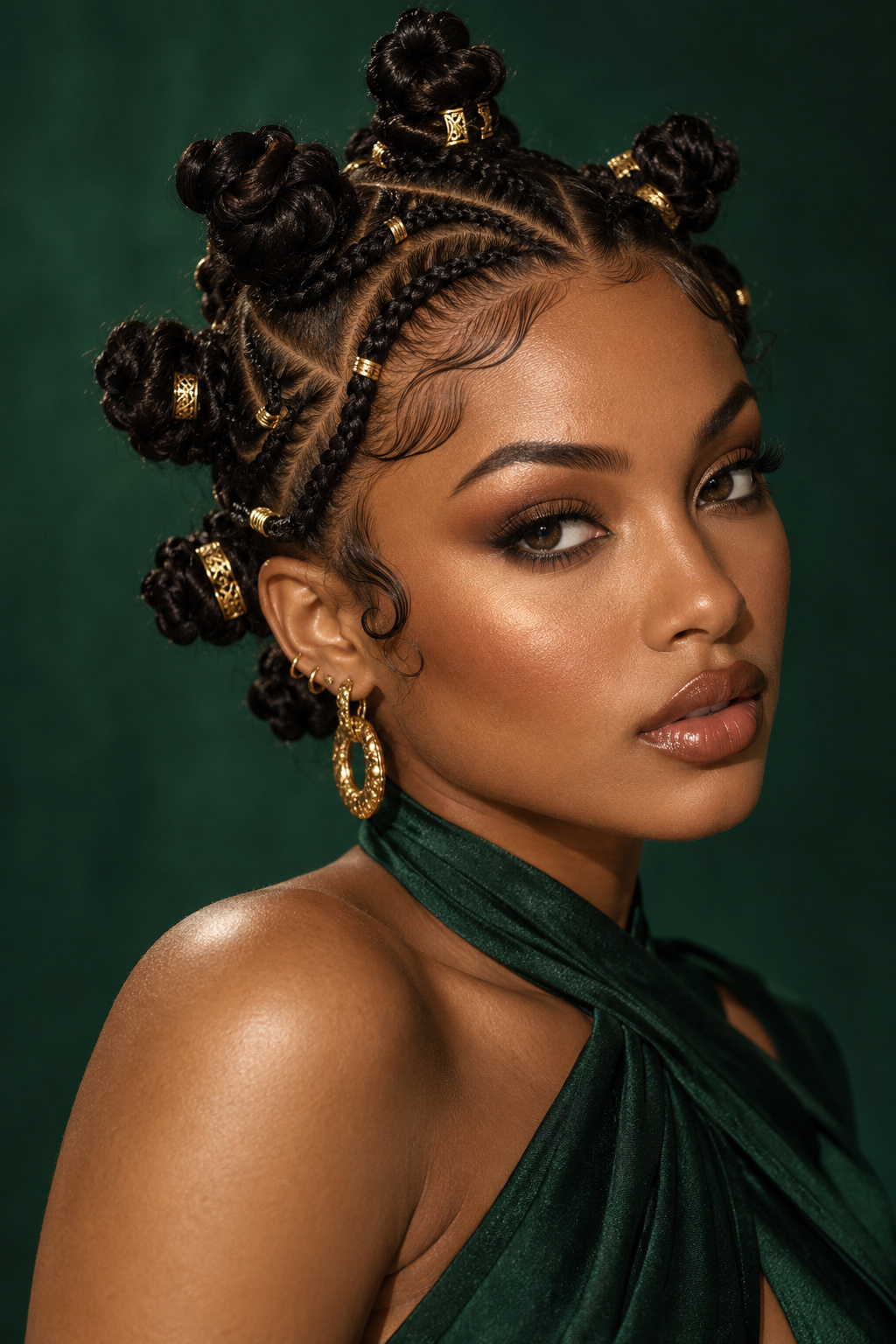
Gold hair cuffs and fine braided details turn these dark coiled knots into something distinctly dressed up. The small metallic elements catch the light without covering the knot pattern, and the braided lines near the forehead add another layer of structure. This is an easy visual reference for how accessories can change the character of a hairstyle without changing its core silhouette.
13. Compact Bantu Knots With a Close-to-the-Head Shape
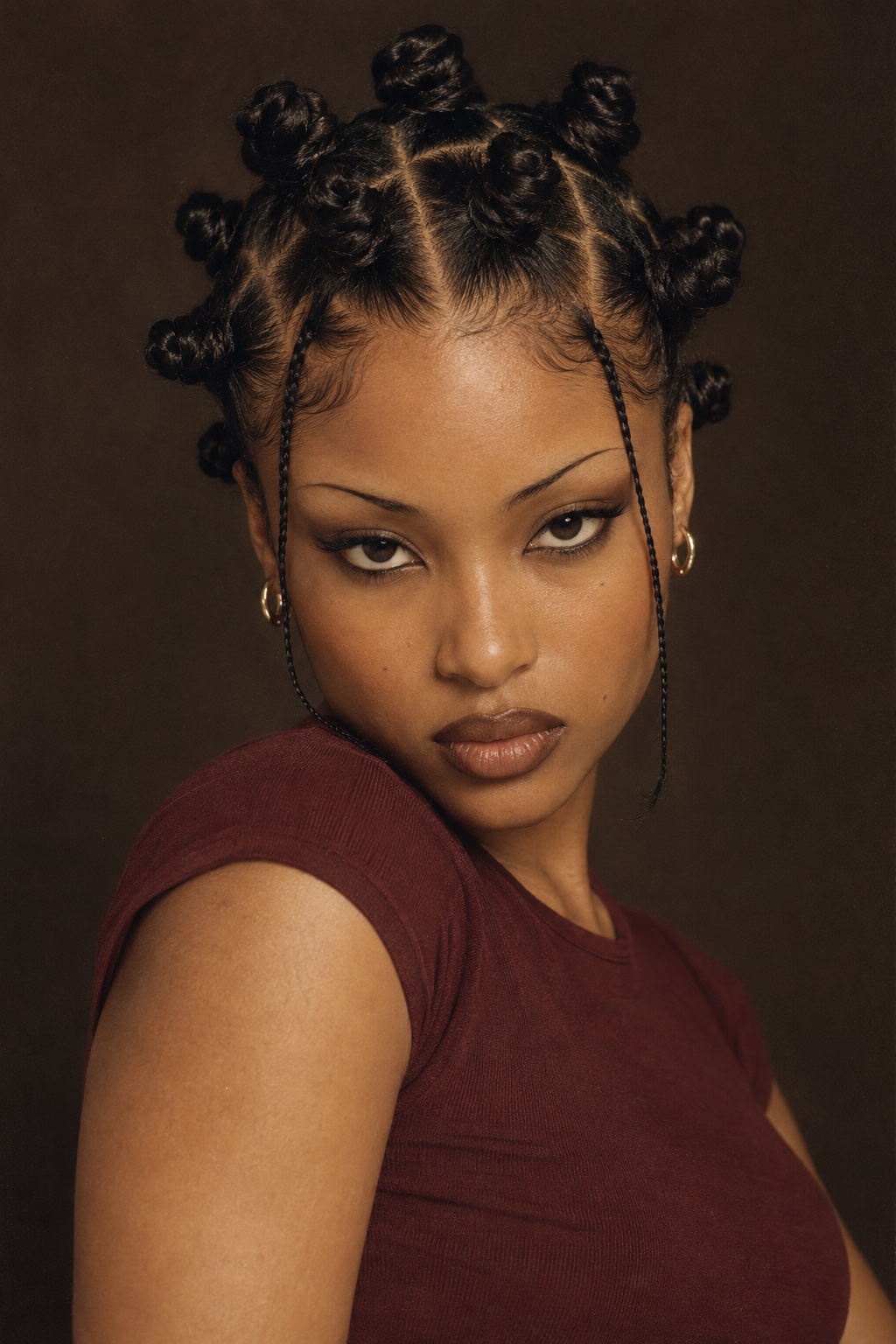
A closely arranged set of small knots creates a dense, textured outline. The darker, moodier portrait emphasizes the individual coils and the tidy central parting, rather than accessories or extra length. It’s a good example of how Bantu knots can remain visually interesting when the styling stays minimal and the shape itself does the work.
14. Delicate Bantu Knots With Curly Face-Framing Pieces
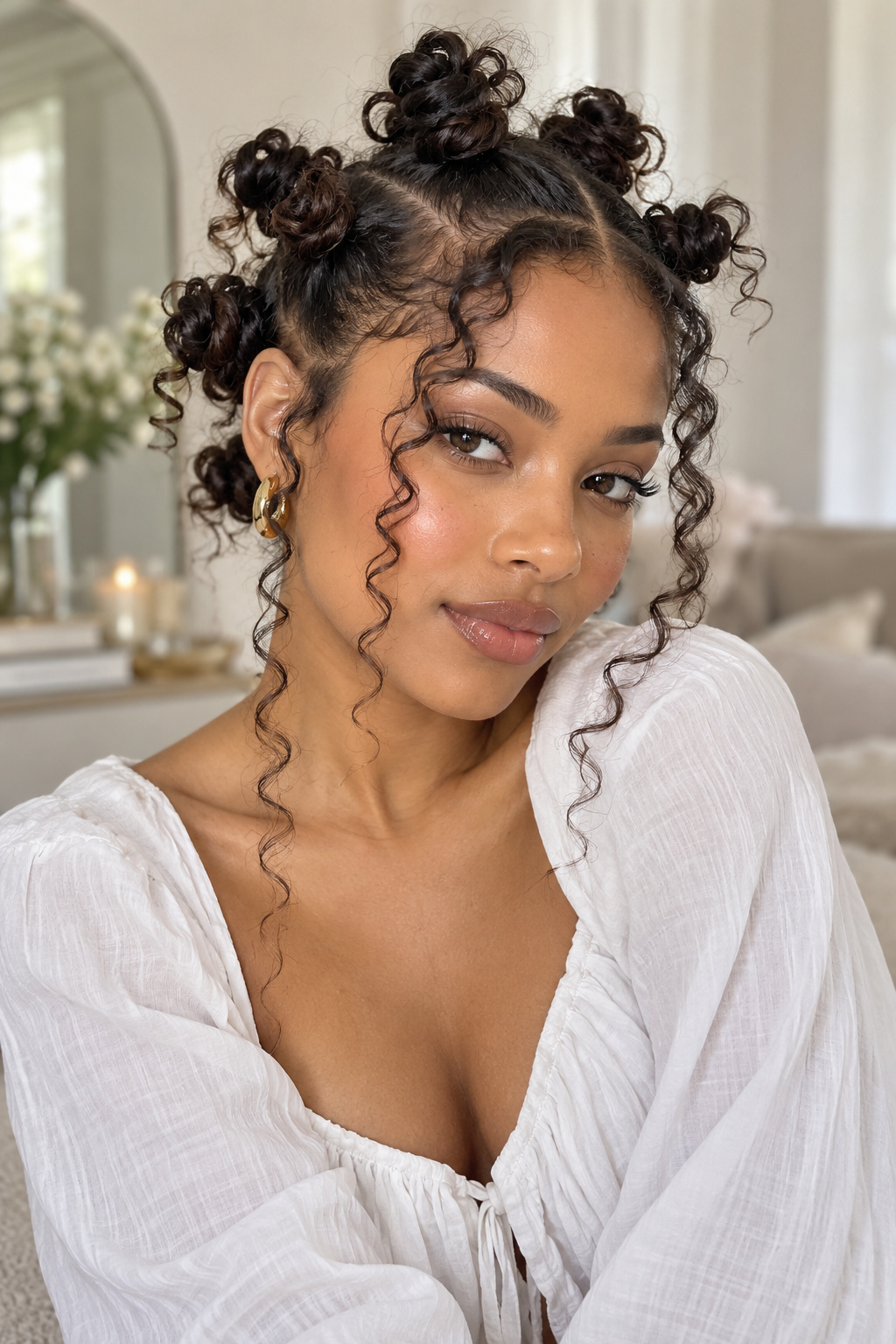
This airy look pairs small knots across the head with delicate curled strands beside the cheeks. The loose pieces are longer and more defined than in some of the fully coiled styles, softening the front while preserving the knot pattern above. The result balances structure with movement and suits a more romantic styling direction.
15. Polished Bantu Knots With Gold Details
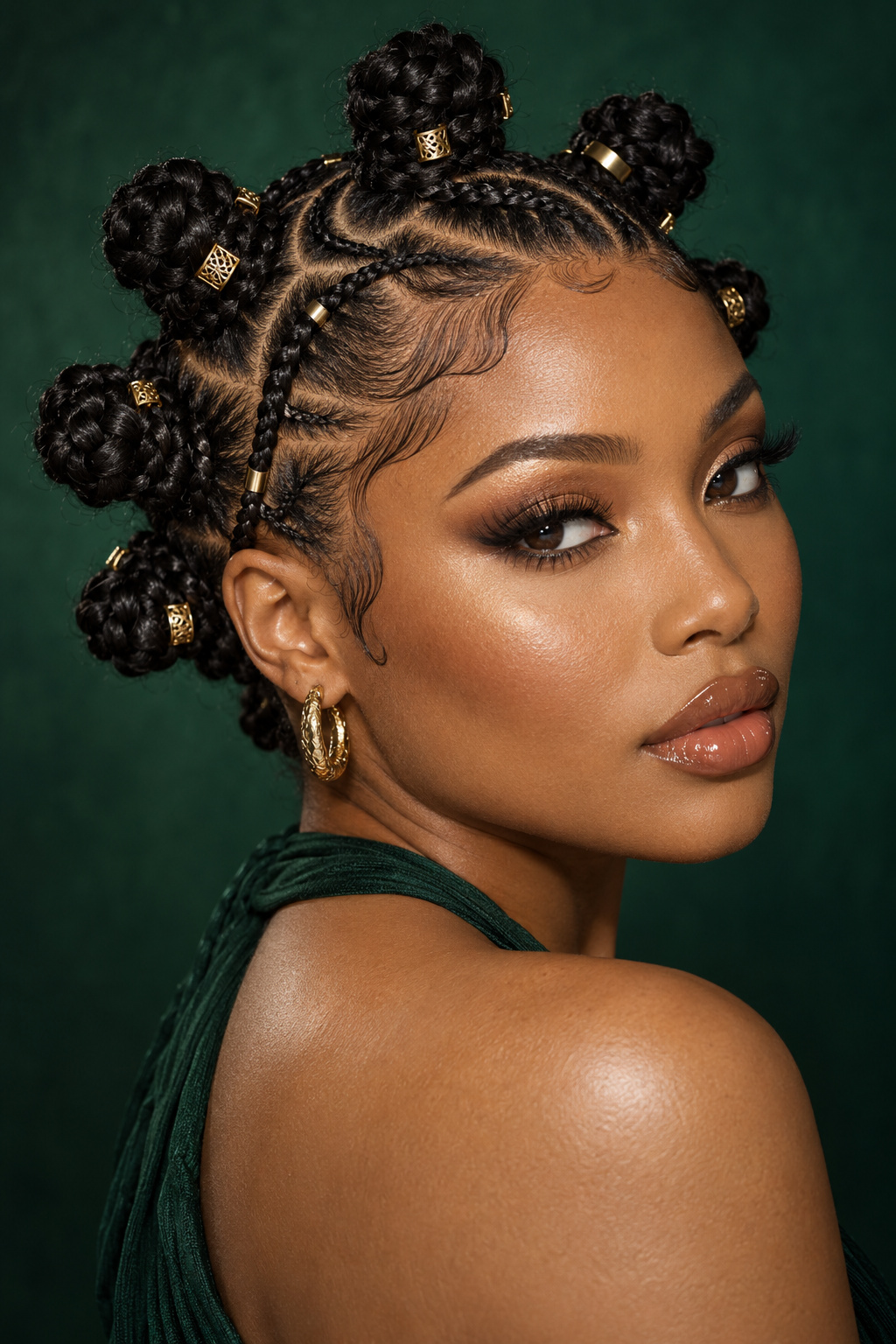
For a final look with a stronger evening feel, these glossy dark knots are accented with small gold pieces and decorative braided lines. The closer portrait makes the details easy to notice: contrast between smooth hair sections and textured coils, tiny metallic highlights, and softly shaped edges. It shares the jewelry-inspired approach of look twelve, but its tighter framing gives it a different emphasis.
How to Pick Your Favorite Bantu Knots Look
Choosing between these styles is easier when you focus on one feature at a time. Love a neat, graphic finish? Start with the crisp partings in looks 1, 3, and 9. Prefer a softer silhouette? Compare the full curls in look 2 with the face-framing tendrils in looks 10 and 14. If you want drama without extra decoration, look at the oversized knots in look 7.
What Makes Each Bantu Knots Look Different?
Parting shapes, knot size, placement, color, and added details can dramatically change a finished hairstyle. Small knots create an all-over texture and make section patterns more prominent; larger knots put the focus on silhouette. Curly sections left loose soften the look, while braided strands or metallic accessories introduce another layer of contrast. Looking at front, side, and back views can help you decide which features matter most to you.
Bantu knots are also different from a Bantu knot-out: one showcases the coiled knots themselves, while the other refers to the textured result after the knots are released. If you’re looking for a tutorial rather than inspiration photographs, seek a step-by-step demonstration that clearly shows sectioning and gentle wrapping techniques.
A Few Styling and Comfort Notes
If you’re trying Bantu knots on your own hair, consider your hair’s texture, length, and how much tension feels comfortable. The knots should not pull painfully at the scalp. A little patience with clean sections can help the finished pattern look more intentional; the exact result varies by hair type and styling method. You can also show a stylist the reference image you like best, pointing out the knot size and parting design rather than expecting every detail to translate identically.
Frequently Asked Questions About Bantu Knots
Are Bantu knots and a Bantu knot-out the same thing?
No. Bantu knots are the coiled buns you wear in place. A Bantu knot-out is the curled or textured look you get after carefully releasing the knots. The two styles can look very different, even though one can lead to the other.
Can you wear Bantu knots on short hair?
Often, yes. The result depends on how much hair can be gathered into each section and how securely the coils can be formed without pulling. Smaller sections may help with shorter lengths, but a stylist can advise on what is comfortable for your hair.
Do Bantu knots have to be the same size?
Not at all. Small, even knots give a repeating pattern; larger knots create a bolder silhouette. You can also vary their size deliberately, as long as the overall design looks balanced to you.
How can you make Bantu knots more comfortable?
Avoid painful tension at the roots, and do not keep tightening a knot that pulls at your scalp. A neat-looking style does not need to feel tight. If you are unsure how to secure the hair comfortably, ask a hairstylist for a gentle approach suited to your hair.
Which Bantu knots look is easiest to choose for inspiration?
Start with the detail you like most: clean partings, jumbo knots, loose curls, color, or accessories. Save a picture that clearly shows that feature—ideally with the front or back angle you care about. You do not need to recreate every detail to get a similar overall mood.
Final Thoughts
There isn’t just one way for Bantu knots to look beautiful. A crisp set of small coils, an airy half-up style, a copper-colored arrangement, and three oversized knots all tell different visual stories. Save two or three favorites rather than trying to choose every detail at once. Look at the part lines, knot size, and loose or braided pieces, then ask which combination feels most like you. If you are planning a salon visit, showing your favorite photos from different angles is a simple way to start the conversation. And if you are curious about trying the style yourself, choose a genuine step-by-step tutorial rather than treating inspiration portraits as instructions.